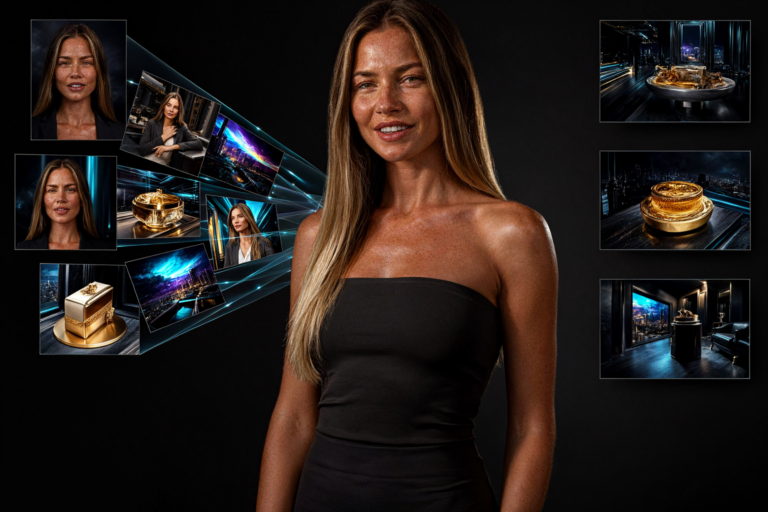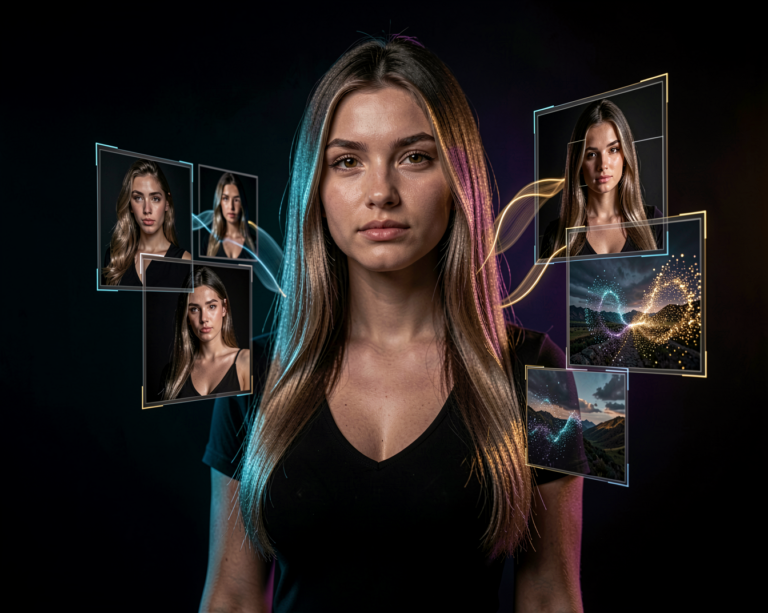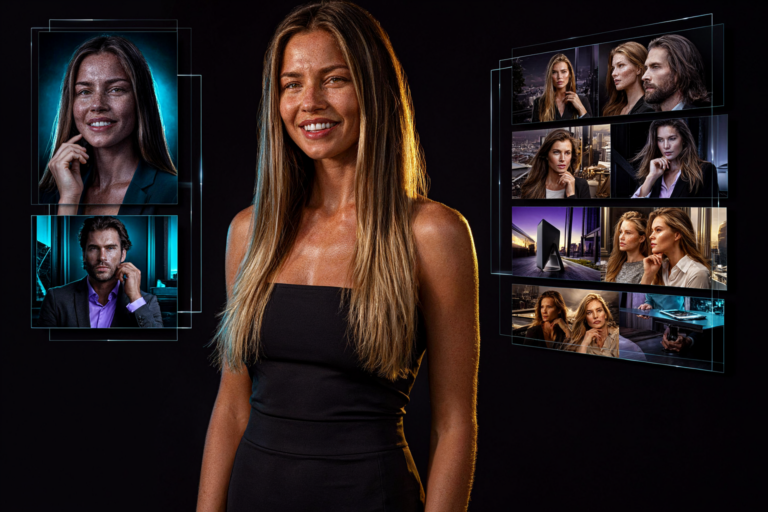
AI video generation is moving fast, and Wan continues to be one of the most interesting open models for creators who want to experiment locally.
With Wan2.2, the Wan team introduced a major upgrade to its video generation family, bringing improvements to motion, cinematic aesthetics and efficiency while expanding the range of things the model can do.
For creators using tools such as ComfyUI, Wan2.2 is particularly interesting because it isn’t just one model.
It is becoming an entire ecosystem for AI video creation.
What Is Wan2.2?
Wan2.2 is the next major generation of the Wan video-generation family.
The release introduces several important changes, including a Mixture-of-Experts (MoE) architecture, improved training data and a new 5B model designed for efficient high-definition video generation.
The result is a model family covering several different creative workflows:
- Text-to-video
- Image-to-video
- Text-and-image-to-video
- Speech-to-video
- Character animation
- Character replacement
That makes Wan2.2 much more than a simple text-to-video model.
A Mixture-of-Experts Approach
One of the biggest technical changes in Wan2.2 is the introduction of a Mixture-of-Experts architecture.
Instead of relying on one model for every stage of video generation, Wan2.2 uses specialized experts for different parts of the denoising process.
One expert focuses more heavily on the early stages, where the overall structure and composition of the video are established.
Another specializes in the later stages, where details are refined.
The Wan team says this allows the model to increase its overall capacity while keeping the active computation at each step more manageable.
For someone simply generating videos, the technical details may not matter much.
But the idea is important:
More model capacity does not necessarily have to mean proportionally more computation for every generation step.
Better Motion
Video generation is fundamentally different from image generation.
An image only has to look correct once.
A video has to remain believable across many frames.
That means movement is one of the hardest problems for generative AI.
Wan2.2 was trained using substantially more visual data than Wan2.1, including 65.6% more images and 83.2% more videos, according to the Wan team.
The goal is better generalization across motion, semantics and visual aesthetics.
In practical terms, this means Wan2.2 is designed to handle more complicated movement and more varied scenes.
That could mean everything from a person walking through a city to more complicated camera movements and cinematic sequences.
Cinematic-Level Aesthetics
Another major focus of Wan2.2 is visual style.
The training data includes detailed aesthetic information covering elements such as:
- lighting
- composition
- contrast
- color tone
- overall visual quality
This gives the model more information about what makes a video look cinematic.
For creators, this matters because AI video isn’t only about movement.
A technically correct video can still look terrible.
Lighting, framing, color and composition are what turn moving images into something that actually feels like a scene.
Wan2.2 TI2V-5B
Perhaps one of the most interesting parts of the Wan2.2 release for local AI users is the TI2V-5B model.
Unlike the larger A14B models, this version has 5 billion parameters and is designed around a highly compressed video representation.
It supports both text-to-video and image-to-video generation and can generate 720p video at 24 frames per second.
The Wan team specifically designed this model with consumer hardware in mind and reports that it can generate a five-second 720p video in under nine minutes on a single consumer GPU without specific optimization.
That makes the 5B model particularly interesting for people experimenting with local AI.
And this is where Wan2.2 becomes especially relevant to creators rather than just researchers.
Wan2.2 and ComfyUI
Wan2.2 was integrated into ComfyUI shortly after release, making it accessible to the huge community of local AI creators already building workflows there.
This is important because ComfyUI allows Wan2.2 to become part of a much larger pipeline.
For example:
Image Generation → Wan2.2 Image-to-Video → Upscaling → Frame Processing → Final Video
Or:
Character Image → Wan2.2 → Motion → Video Editing
Instead of treating video generation as one isolated operation, creators can combine different models and tools.
That is one of the biggest advantages of local AI.
From Image to Video
For many creators, image-to-video will be one of the most useful Wan2.2 workflows.
You can first create a highly detailed still image using an image-generation model.
Then Wan2.2 can use that image as the starting point for a moving sequence.
For example:
Still image:
Aiden standing on a rainy city street at night.
Video prompt:
Aiden slowly walks toward the camera while rain falls around her, her hair moves naturally in the wind, reflections shimmer on the wet pavement, cinematic camera movement.
The image establishes the character and composition.
Wan then attempts to add the movement.
This separation between visual creation and motion generation can be extremely powerful.
Character Animation
Wan2.2 also expanded beyond conventional text-to-video and image-to-video generation.
The Wan2.2-Animate-14B model was introduced specifically for character animation and replacement. It can replicate movement and expressions from a reference performance and apply them to another character.
That opens up another interesting category of AI video.
Instead of simply asking:
“Create a person walking.”
you can start thinking:
“Take this character and make her perform this movement.”
For AI characters, virtual influencers and creative storytelling, that distinction can be huge.
Speech-to-Video
Wan2.2 also expanded into audio-driven video generation.
The Wan2.2-S2V-14B model was introduced for speech-to-video and audio-driven cinematic video generation. The Wan project also added support for speech synthesis through CosyVoice for the speech-to-video workflow.
This creates an interesting bridge between audio and video.
Instead of generating a silent clip and adding audio later, the audio itself can become part of the generation process.
That opens the door to applications such as:
- talking characters
- music-driven visuals
- narrated scenes
- performance animation
- cinematic character clips
Why Wan2.2 Matters for Local AI
The biggest reason Wan2.2 is interesting isn’t necessarily that it produces another impressive AI video.
It is the combination of open models, multiple workflows and local generation.
Creators can experiment with different model sizes and workflows depending on their hardware.
For example, the Wan2.2 family includes larger 14B-class models as well as the more accessible TI2V-5B model.
That gives creators more options.
A powerful workstation can tackle more demanding workflows.
A smaller system can experiment with the more efficient models.
And with ComfyUI, those models can become part of highly customized workflows.
Wan2.2 on Consumer Hardware
Video generation is still demanding.
Even a relatively efficient model can consume significant VRAM and take considerably longer than generating a single image.
The exact hardware requirements depend on:
- model variant
- resolution
- number of frames
- precision
- quantization
- workflow
- offloading
- optimization
The TI2V-5B model is particularly interesting here because Wan specifically designed it as a more efficient high-definition option. The official release states that it supports 720p at 24 FPS and can run on consumer-grade GPUs.
For local creators, this is exactly the kind of development worth watching.
What Can You Create With Wan2.2?
The possibilities are surprisingly broad.
You can create:
- cinematic scenes
- short films
- character animations
- social media clips
- music videos
- image-to-video sequences
- talking characters
- visual effects
- concept videos
- animated artwork
- product demonstrations
- experimental AI films
And because the different Wan2.2 models target different workflows, creators aren’t restricted to one type of generation.
The Bigger Picture
Wan2.2 shows where open AI video generation is heading.
The goal is no longer simply:
“Generate a five-second video.”
The bigger goal is to give creators control over the entire process.
Create the character.
Choose the scene.
Generate movement.
Control the camera.
Add audio.
Animate the character.
Then combine everything into a finished video.
Wan2.2 is another step toward that kind of modular AI filmmaking.
Final Thoughts
Wan2.2 is a significant upgrade to the Wan family.
The introduction of Mixture-of-Experts models, improved training data, stronger attention to cinematic aesthetics and the more efficient TI2V-5B model make the release particularly interesting for local AI creators.
And the ecosystem has continued to expand with specialized models for animation and speech-driven video.
For anyone already using ComfyUI, Wan2.2 is therefore more than just another video model.
It is a toolbox.
And that may ultimately be what makes Wan so interesting.
Instead of simply generating video, Wan2.2 gives creators more ways to decide what that video should become.