Not every AI image model is trying to create a photorealistic photograph.
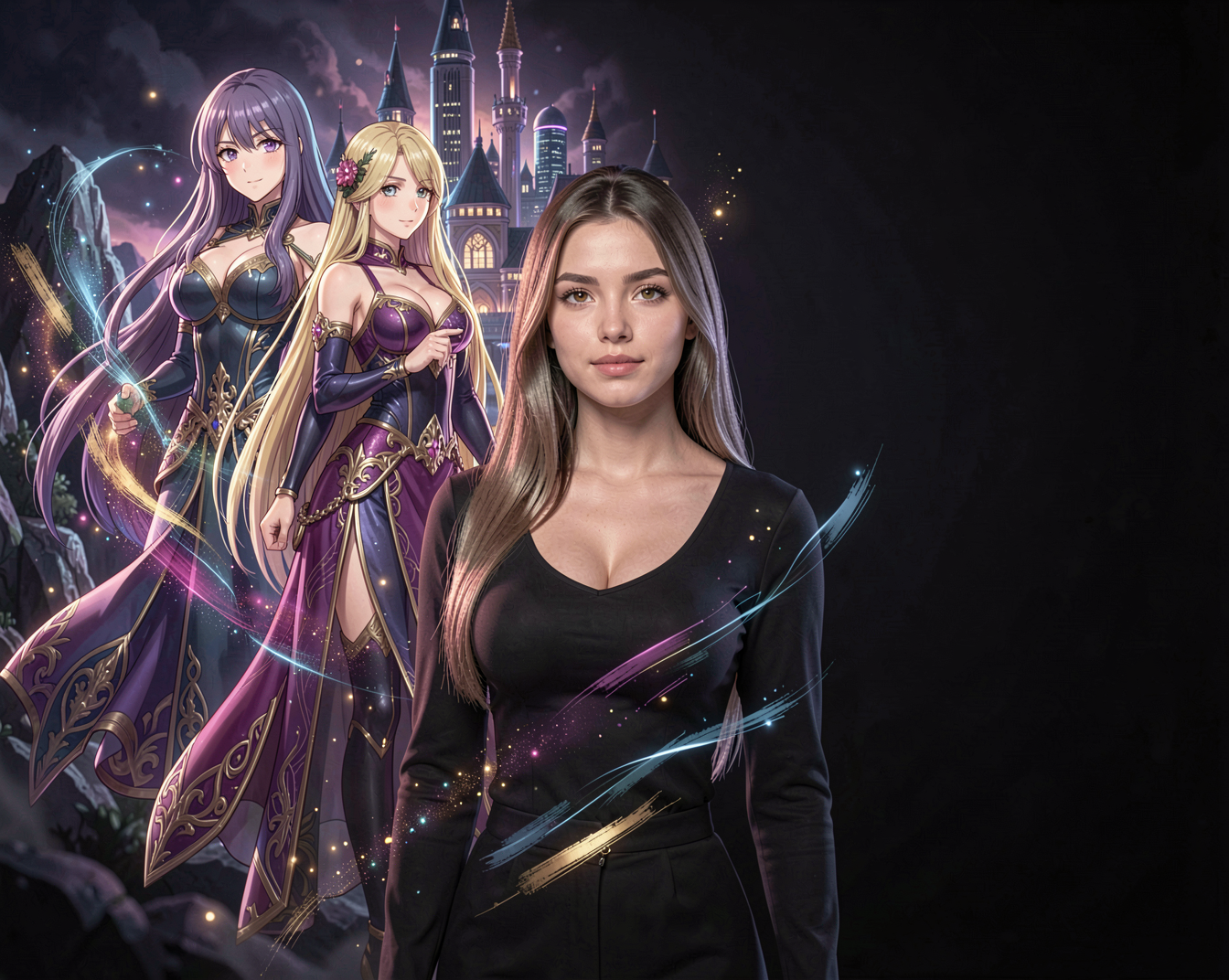
Some models are built specifically for illustration, anime and highly detailed characters. Illustrious XL is one of the models that has become particularly interesting in that world.
Developed by OnomaAI Research, Illustrious is an SDXL-based image generation model focused on illustration and anime-style artwork. It was trained using large-scale annotated datasets including Danbooru2023, giving it a strong understanding of the tags and concepts commonly used in anime and illustration workflows.
For creators who work with characters, anime artwork, fantasy illustrations or LoRAs, Illustrious is a model worth knowing.
What Is Illustrious?
Illustrious XL is a text-to-image model based on the Stable Diffusion XL architecture.
But simply calling it “another SDXL model” doesn’t really describe what makes it different.
The model was specifically developed around illustration and anime-oriented image generation. It understands both natural language and structured tags, making it possible to describe an image in a normal sentence or use the more precise tagging style familiar to the anime-generation community.
This combination is one of the reasons Illustrious has become popular as a base for many community checkpoints and LoRAs.
What Can You Create With Illustrious?
Illustrious is particularly suited to character-focused artwork.
You can use it for:
- Anime characters
- Manga-style artwork
- Fantasy characters
- Game characters
- Character portraits
- Full-body illustrations
- Fashion and costume designs
- Fantasy environments
- Sci-fi artwork
- Stylized portraits
- Concept art
- Character sheets
- Illustrations for stories
It can also handle detailed scenes containing multiple visual elements.
The important thing is that Illustrious is not trying to imitate a DSLR photograph first. Its strength lies much more in illustration, character design and stylized artwork.
Natural Language or Tags?
One of the most interesting aspects of Illustrious is its hybrid prompting approach.
You can describe a scene using normal language:
A young woman standing in a magical forest at sunset, wearing an elegant fantasy dress.
But you can also use structured tags:
1girl, long hair, fantasy dress, forest, sunset, looking at viewer
And you can combine the two approaches.
This gives creators a considerable amount of control.
Natural language can describe the overall scene, while tags can be used to specify individual characteristics such as clothing, hairstyle, pose, expression and environment. The Illustrious ecosystem specifically promotes this hybrid approach.
Why Are Danbooru Tags Important?
If you have used anime-focused Stable Diffusion models before, you have probably encountered Danbooru tags.
These tags are structured descriptions commonly associated with anime images.
Illustrious was trained using large-scale annotated data, including Danbooru2023, which gives the model a strong relationship between these tags and visual concepts.
This can make it much easier to control details.
For example, instead of relying entirely on a long natural-language prompt, you can specify things such as:
- Hair color
- Hair length
- Eye color
- Clothing
- Accessories
- Pose
- Facial expression
- Camera angle
- Background
- Character count
For experienced Stable Diffusion users, this can feel very familiar.
Illustrious and Character Creation
Character generation is probably one of the strongest reasons to experiment with Illustrious.
A creator can start with a basic character concept and gradually build it into a detailed visual identity.
For example:
A young female fantasy adventurer with long silver hair, blue eyes, a dark leather outfit and a magical sword, standing in an ancient forest.
You can then add more structured details to control the character’s appearance.
This makes Illustrious particularly interesting for:
- Game development
- Character design
- Storytelling
- Visual novels
- Anime projects
- Social-media characters
- Concept development
And because the model has become a popular base for fine-tuning, the community has created a large ecosystem around it.
Illustrious and LoRAs
This is another major advantage.
Illustrious can be used as a base for LoRA training and fine-tuning. The model’s documentation specifically describes it as a useful foundation for artists and fine-tuners.
That means you can train specialized LoRAs for things such as:
- Characters
- Clothing
- Art styles
- Poses
- Visual effects
- Locations
- Specific concepts
For anyone interested in training their own AI characters, this makes Illustrious particularly interesting.
The workflow can be very similar to what many Stable Diffusion users already know:
Base model → dataset → captions/tags → LoRA training → generation
The result can then be used inside a larger ComfyUI workflow.
Illustrious and ComfyUI
If you already use ComfyUI, Illustrious fits naturally into a local workflow.
The model is available in formats suitable for local image generation, and community tooling has developed specifically around Illustrious. There are also dedicated ComfyUI tools and extensions built around Illustrious prompting and generation.
That makes it possible to create workflows where you can combine:
- Illustrious
- LoRAs
- ControlNet
- Upscaling
- Image-to-image
- Inpainting
- Prompt enhancement
- Custom nodes
This is where Illustrious becomes more than an anime image generator.
It becomes a flexible creative tool.
Native High Resolution
One of the notable characteristics associated with Illustrious XL is its focus on higher-resolution illustration.
The current Illustrious documentation describes native generation around 1536 × 1536, rather than treating 1024 × 1024 as the primary native resolution.
For illustration, this can be particularly useful.
Fine details such as:
- Hair
- Clothing
- Jewelry
- Eyes
- Background details
- Small decorative elements
can benefit from additional resolution.
Of course, higher resolution also means higher computational requirements, so your available VRAM and workflow settings still matter.
Illustrious vs Photorealistic Models
If you are coming from models such as FLUX, Z-Image or other photorealistic checkpoints, Illustrious can feel very different.
A model like FLUX can be pushed toward realistic photography.
Illustrious is much more comfortable creating stylized characters and illustrations.
That doesn’t mean it cannot produce highly detailed images.
It simply has a different artistic bias.
Think of it this way:
FLUX: photography and general-purpose image generation
Z-Image: efficient modern image generation and photorealism
Illustrious: anime, illustration and stylized characters
Choosing the right model therefore depends heavily on what you want to create.
Prompting Illustrious
Prompting Illustrious can be particularly fun because you can mix natural language with tags.
For example:
A young woman standing on a balcony overlooking a futuristic city at night, cinematic atmosphere, soft moonlight, 1girl, long dark hair, blue eyes, elegant dress, looking at viewer, city lights, night
The first part describes the overall concept.
The tags then provide more precise visual instructions.
You don’t necessarily need an enormous prompt.
A well-structured description with the right tags can often give you more control than simply adding hundreds of random quality words.
Is Illustrious Good for Beginners?
It depends on what you want to create.
If your goal is photorealistic people, Illustrious probably isn’t the first model you should choose.
But if you want to create anime characters, fantasy illustrations or stylized artwork, it is much more interesting.
The biggest learning curve is understanding how the tagging system works.
Once you understand that, the model becomes considerably easier to control.
The Illustrious Ecosystem
One of the most interesting things about Illustrious isn’t just the base model.
It is the ecosystem that developed around it.
Searching model repositories today reveals a large number of Illustrious-based checkpoints, LoRAs and derivatives.
This means creators can experiment with different interpretations of the original model.
Some focus on:
- Anime
- Characters
- Illustration
- Realistic anime
- Specific art styles
- Fantasy
- Game characters
That makes Illustrious more of a foundation than a single finished style.
Is Illustrious Worth Trying?
If anime or illustration is part of your AI workflow, definitely.
Illustrious offers a combination that makes it particularly interesting for local creators:
SDXL architecture.
Strong anime and illustration knowledge.
Natural-language prompting.
Danbooru-style tags.
LoRA and fine-tuning possibilities.
A large community ecosystem.
For someone who enjoys experimenting with ComfyUI, this provides plenty of possibilities.
And perhaps most importantly, Illustrious demonstrates something that is easy to forget when looking at the latest photorealistic models:
AI image generation isn’t just about making photographs.
There is an entire world of illustration, character design and visual storytelling where specialized models can be much more useful than a general-purpose image generator.
The Future of Illustrious
Illustrious has already developed into more than a single checkpoint.
Different versions, community fine-tunes and specialized models continue to expand the ecosystem. Current repositories include versions such as Illustrious XL 2.0 as well as many community derivatives.
That makes the model family particularly interesting to watch.
For creators, the real attraction isn’t necessarily one specific version.
It is the ability to take an illustration-focused base model and build your own creative workflow around it.
Specific Illustrious releases and major model updates will be covered separately in the AI News section of Aiden Illusion.